
Rishi Sunak announced last week that on his watch “we will not lose swathes of our best farmland to solar farms” as part of his Conservative leadership bid. His announcement of his commitment to farmlands echoed a similar statement a week prior by his leadership opponent and frontrunner Liz Truss who committed to prevent “filling fields with paraphernalia like solar farms”. Ultimately, this demonstrates a growing consensus within the Conservative Party that the party ought to adopt a stance to oppose the transitioning of farmlands to solar farms. The key point I want to focus on however is not the merits of solar farms, but how this relates to a growing trend of NIMBYism within British Politics which has demonstrably seeped its way right to the top now seen in the reiteration of NIMBY talking points in this race for the next Prime Minister.
For those not aware, NIMBY, which stands for “not in my backyard”, is an acronym used to label opponents of local proposals for developments, and NIMBYism refers to that stance. The announcements by Rishi Sunak and Liz Truss demonstrate the way in which NIMBYism has encouraged politicians to jeopardise wider national goals, in this instance transitioning towards a greener economy, because it is perceived as being politically advantageous to gain support by opposing developments. Ultimately this is where I will place the most criticism of NIMBYism, that it is something which is entirely about electoral viability which stunts your national goals. It becomes difficult to achieve broader goals such as achieving a transition towards green energy in this instance if you are opposing solar farm creation and local developments.
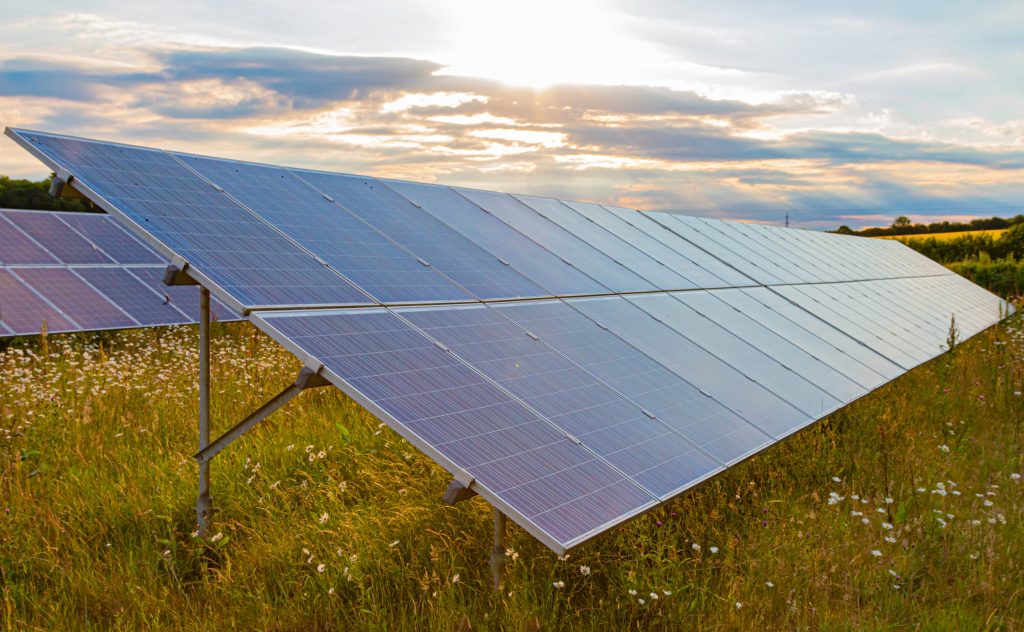
Sticking with the theme of solar farms, we know that community opposition to these developments have proved electorally decisive at a local level recently. Just this year in the rural conservative county of Rutland, a by-election for the ward of Ryhall and Casterton saw the Conservatives who were the favourites get upset by a candidate who stood in opposition to the Mallard Pass solar farm situated within the ward which is exactly the sort of development that the two Conservative leadership candidates are criticising as its converting farmland. Perhaps most shockingly about that council by-election is the fact that this candidate stood for the Green party and yet simultaneously stood in opposition to a renewable energy development. There is much you can draw from that, but perhaps the most important is that the goals of political parties become blurred when community activism undermines the broader intentions of the political party.
To analyse the NIMBY mindset, the words of the newly elected green party councillor for Ryhall and Casterton are useful because they lay out the important aspects of the opposition towards this solar farm development. His words were “We do need renewable energy which has been brought into sharper focus by recent world events, but there are other green initiatives we can pursue and there are more suitable locations”. We can break this down into three parts. First, the councillor makes the admission that “we do need renewable energy”, which is important because it’s important to understand NIMBYism is usually not framed in a way that opposes the goals of the development and candidates often recognize the needs of the nation or region in their argument. The rejection of it is usually based on two grounds which he elaborates on further. His second point is that “there are other green initiatives” which we can call a criticism of the form of development. So, in this case it could be that he is arguing that solar energy is not ideal and that we might want to focus on wind energy or nuclear energy, or that solar energy is useful, just not in these particular circumstances. His other justification for opposition is that “there are more suitable locations”, arguing essentially yes we need to develop, but this is not the best place for such a development to happen. Bringing that all together, his argument and mindset isn’t a rejection of the problem trying to be addressed, but rather a criticism of the locality of the development and the form of development being made.
We can understand the fundamental problem within the NIMBY mindset in these three parts of the mindset. The problem is typically accepted to be pressing and needing a solution, but the solution presented is rejected by politicians because of the proximity to you or your constituents. That is selfish in nature because your criticism is based on the way in which you’re affected by a solution to a common problem that the nation faces. Any community could reject any development based on the same justifications. That doesn’t mean that there are instances where developments shouldn’t be opposed, but that the opposition needs to be far more substantive and that going through a cycle of constant community activism against any form of development across Great Britain is going to be really damaging long term for the huge series of challenges that the country is facing. We cannot solve problems without being able to implement solutions.
Today we face two key crises that are really bringing to attention why NIMBYism as a trend in our politics is seriously damaging to our next generation. These are the climate crisis and the housing crisis. We’ve already touched on how opposing solar developments has been effective in local politics and become mainstream in national politics, but it’s important to explain why this is dangerous. With this summer showing Europe and China just how much our climate is changing with record breaking heat waves, it has become more clear than ever that we need a greener society and we cannot do that without building the infrastructure which moves us away from unclean energy production. If that infrastructure is frustrated at every level of government, then these developments won’t happen and that would be detrimental for our climate. Another side effect will be that we as a country are less self-sufficient in our energy production which considering the geopolitics of Russian gas and the huge rises in energy bills related to that, is vital to encourage. Similarly, the housing crisis is being exacerbated and made worse by the lack of political will, particularly in local government, to approve housing developments.
The Housing Crisis is recognized nationally by all parties. At the last election, the Conservatives committed to 200,000 homes a year, the Labour Party 150,000 and the Liberal Democrats 300,000. Yet, within local politics home building becomes political kryptonite because it is easy to attract voters by opposing home building. One way in which new housing is often made difficult to build is the green belt. We’ve seen this issue brought up in the Conservative leadership contest with Rishi Sunak vowing to only build on the ‘brownfield, brownfield, brownfield’, with Liz Truss also opposing building on the Green Belt. The Green Belt is arguably one of the most misunderstood government policies. The Green Belt is essentially a policy which is about preventing urban sprawl, rather than protecting particularly important green areas. For instance, the Lake District, the Yorkshire Dales and the North York Moors are all areas which are brownfield. When you map out the green belt its like getting a ring donut and placing it around a city to stop expansion. The effect of this is that it prevents housebuilding where housebuilding ought to be. Rather than building on the edges of urban areas, developers are forced to develop in the rural countryside, ironically having an impact of tarmacking over the countryside. Having green areas on the edges of cities is important, but the model of building rings around cities is perhaps outdated. Looking abroad to city planning designs, one model which offers developers the ability to continue to build would be the fingers model of development around Copenhagen. This ensured the creation of green areas but allowed Copenhagen to develop along five ‘fingers’ that stretched out of the city. These sorts of approaches enable development to happen along predetermined paths which allow infrastructure to be planned best around future developments.
Altogether, with growing demands for affordable housing, the need to transition to a cleaner environment and the fact that the next generation will be less well off than the generation before it, the need for development across Britain seems clear. Yet, at the very time when we need to be building, now more than ever, it feels as though our politics is working against that interest. One of the driving forces around NIMBYism is that it is electorally viable and that is the case because people across this country are valuing their own proximity to developments over the developments themselves. One myth is that when your area gets a new housing development you lose out on your house value, but a recent study by LSE found that with the exception of the period of time during construction, values of houses in these areas continued with regional average trends. We as young people need to take on the mantle of making it more politically popular to build and to encourage developers. There is more to be done politically, but just in marketing to people the merits of development and disproving myths, we can get communities behind new developments and that will be one of the most important steps in ensuring we build the infrastructure for the next generation.

 The Next Conversation