Third Parties in Britain: Political change from outside the two party system.

The 2010s: Change was the Mantra

The 2010s were a period of great political turbulence. For a decade, we were passengers on a political rollercoaster with dramatic turns shaping the political atmosphere, the rise of political insurgents and their eventual falls, and all with such speed. The Governments of the 2010s were marked by small or no majorities. A big cause for this was the rise, and in most cases fall, of third parties. The 2010s were really an unpredictable period of British political history, and yet, it will also be remembered as a Conservative decade where we saw the same party stay in office, even if it would do so with three different leaders and a remarkably different gleam to the one that took office in 2010.

Notably, the 2010s were filled with ambitious campaigns for change. The Liberal Democrats, who had for two decades been the main vehicle for political reform entered office. Closely followed campaigns which reached their peak for Scottish Independence and independence from the European Union, both of which were driven by third political parties in the SNP and UKIP. Then in 2015 Jeremy Corbyn became leader of the Labour Party, offering a very different vision for Britain driven by a socialist lens. Finally, Boris Johnson entered office in 2019 offering a new vision of levelling up and changing the country’s status on the world stage in a world of Brexit opportunities. For most of these, there were mixed results on how successful they proved to be.

There are two fascinating readings you can make into the 2010s that seem very much contradictory. On the one hand the decade was defined by the return of the two-party system. 2010 had seen the smallest combined vote share of the Conservatives and Labour, yet just two election cycles later in 2017, the Conservatives and Labour achieved their greatest combined vote share in 47 years. Furthermore, the breakthrough of third political parties such as the Liberal Democrats in 2010 entering office and UKIP winning the 2014 European Elections were more noteworthy for their ability to essentially get wiped out in subsequent elections. 

An alternative reading of the success of third parties however would stress just how politics has been changed in the last decade by these third parties. The SNP were able to endure after reaching their peak in 2015 when they went from 6 MPs in 2010 to 56 MPs. They have also gone on to be able to win a majority of Scottish seats in parliament in the two general elections since. Furthermore, in 2019 after just 5 months of creation, the Brexit Party were able to win a national election in the 2019 European elections, following on from UKIP’s footsteps in 2014. Arguably this victory invigorated support for Boris Johnson and dramatically changed the direction of the Conservative Party. Outside of electoral success, third parties have been huge parts of major changes in our society, from the Liberal Democrats key role in the 2013 legalisation of same-sex marriage to the 2016 Brexit referendum which became a major issue following the successes of UKIP in Britain.

The 2010s were a unique time of turbulence in our party system, but however remarkable or unremarkable these third parties were in terms of their electoral success across the entire decade, they changed the fabric of the two parties themselves. From the SNP hindering Labour’s stranglehold on Scotland where they used to be able to rely on over 40 seats consistently going down to just 1, to the Brexit Party which became a major pressure on the future of the Conservative Party, the impact of third parties takes multiple form, both electorally, and through their actions. 

Credible Third Parties: Building up the Third Coalition

Voters and political actors wanting to make radical political change can often find themselves using an avenue outside of the two party system due to a natural belief that as these two parties are the status quo, real dramatic change can only occur outside of these two vessels. Yet most simultaneously understand that every government in the last hundred years has had the Conservatives or Labour Party in control (at least as a senior partner). Because of this there is a naïve view that, for instance as a voter, it is better to pick from a bad pair than waste your vote on a third party that might deliver change. There’s also a lot to be said that the Liberal Democrats in their coalition with the Conservatives had a big impact in declining the reputation of third parties on political change. Looking at an issue such as tuition fees, they fell in line rather than sticking to their guns once in office which had a really dramatic impact on the reputation of the party. The challenge for third parties comes down primarily to one word: credibility. 

Most third parties are hindered by the fact they lack credibility. Most people would agree that of the huge swathe of third parties in the United Kingdom, very few will ever make a breakthrough and make an actual impact on national politics. For those who reside in these small parties which rarely have much, if any representation even at a local level, it doesn’t seem to phase them. Often the members of such parties are very principled individuals who find sticking to what they believe in far more important than coalescing together in order to have an impact on the political atmosphere. This is why often these third parties are mired by splits and infighting. For instance, from 2017 onwards UKIP without the unifying figure of Farage broke down. Following 2017 where its vote share dropped by over 80% of its 2015 figure, it saw a split in the subsequent leadership election where the runner up split off to found her own political party ‘For Britain’. Similarly in the European Parliament caucus, MEPs split off to join smaller minor parties most Brits have never come across such as the SDP, Libertarian Party and the Thurrock Independents. 

The two main parties are often described as being broadchurches and actually one thing cited as a benefit of being a third party is that you don’t have to try to be broadchurch. Yet, the reality is, most successful third parties find themselves having to form large coalitions of support still. For instance UKIP was united behind a single message of euroscepticism, while the Liberal Democrats have been able to keep people together behind being the vessel of political reform, the vessel of social liberalism and more recently being fanatically in favour of the EU. The Liberal Democrats provide a perfect example of third parties coalescing with the SDP and the Liberals merging in 1988 following a disappointing election in 1987. Furthermore, they proved that being a larger coalition was more viable long term, despite an early by-election in which the continuity version of the SDP were able to beat them in their first by-election tes. The sheer political force of the larger coalition of the Liberal Democrats, with more people and funding, were able to overcome that early electoral challenge and in an actual general election far surpass the rival continuity versions of these minor parties.

In terms of the Scottish Nationalist Party, arguably the most successful third party in Britain at the moment, they benefited similarly to how UKIP did: keeping party discipline and unity behind a single issue of Scottish nationalism. Even though today the Scottish Green Party and the Alba Party provide alternative opportunities for nationalists, Alba for instance has failed to make any ground at all in spite of the big name of Alex Salmond. Part of the major success of the SNP has been its ability to adapt with the party originally leaning to the right, but realigning to the left in the last few decades in order to better represent Scottish voters. The success of the SNP has been undoubtedly the biggest demonstration of third party prowess, spurred on by the recently created Scottish Parliament which has allowed it to to stay relevant, and within a political system designed to accommodate for numerous parties. The referendum in 2014 on Scottish independence tells us just how successful this third party was in being decisive in government decision making and putting the issue of Scottish independence onto the table. Third parties really can have a political impact, but their success all too often relies on their ability to diversify with a unifying figurehead, issue or ideology. 

Final Remarks

In this short article I’ve tried to establish two different things. First of all, third parties can influence politics. The 2010s have demonstrated a period of time where third parties came in and out of fashion, but their ability to bring issues to light and enter offices of government really made an impact. I then tried to argue the importance of having third parties which are large coalitions. Without diversification of third political parties they are unable to garner enough support and attention and continue to remain small clubs of powerless people.  

Political reform is something I believe in strongly and when looking at the records of previous governments, it is difficult to expect the two main political parties to be serious at political reform when it is likely to hurt them. Within Scotland it has been seen that adopting a new political system to the Westminster model can change the way in which politics is conducted but that this happens at the detriment of the Conservatives and Labour. Expecting either of these two parties to hurt themselves in order to better the way in which we do politics is rather naive. 

Bringing that together, there is a real place for a diverse third political party to offer an avenue of political change. People should not feel as though they need to vote, campaign or fund the two party system when we have seen in recent years just how impactful third parties can be on our politics. Third parties can have their place in British politics. For now it is a difficult road to travel, for the system works so much against their goals, but for any politically engaged person, I hope that the takeaway from this article is that you do not need to capitulate to the two party system, and that it is perfectly legitimate to support a third party without undermining your own political intentions.
NIMBYism is more trendy and dangerous than ever

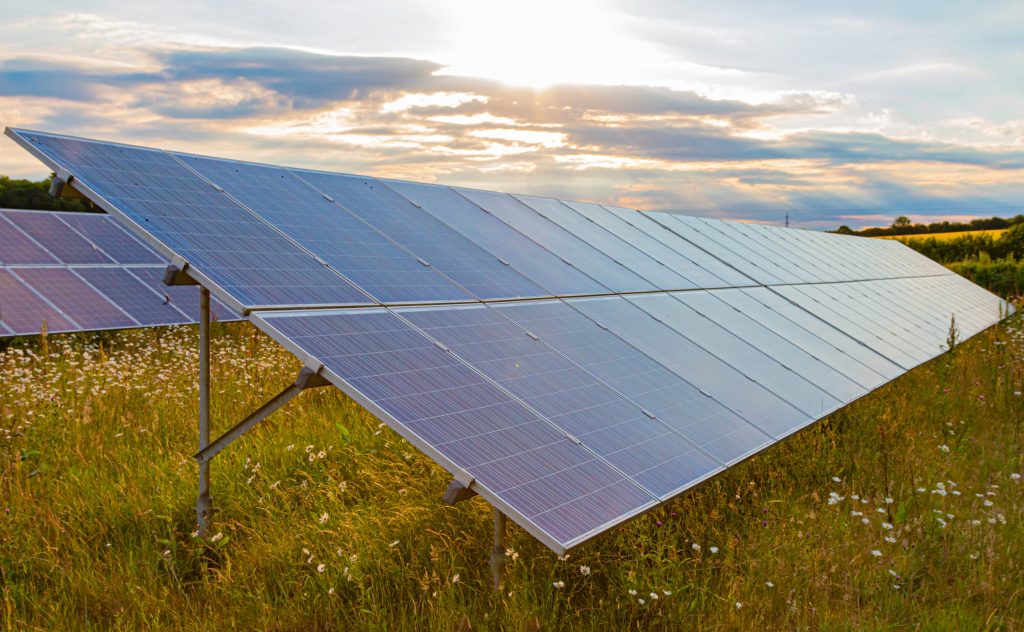
Rishi Sunak announced last week that on his watch “we will not lose swathes of our best farmland to solar farms” as part of his Conservative leadership bid. His announcement of his commitment to farmlands echoed a similar statement a week prior by his leadership opponent and frontrunner Liz Truss who committed to prevent “filling fields with paraphernalia like solar farms”. Ultimately, this demonstrates a growing consensus within the Conservative Party that the party ought to adopt a stance to oppose the transitioning of farmlands to solar farms. The key point I want to focus on however is not the merits of solar farms, but how this relates to a growing trend of NIMBYism within British Politics which has demonstrably seeped its way right to the top now seen in the reiteration of NIMBY talking points in this race for the next Prime Minister.

For those not aware, NIMBY, which stands for “not in my backyard”, is an acronym used to label opponents of local proposals for developments, and NIMBYism refers to that stance. The announcements by Rishi Sunak and Liz Truss demonstrate the way in which NIMBYism has encouraged politicians to jeopardise wider national goals, in this instance transitioning towards a greener economy, because it is perceived as being politically advantageous to gain support by opposing developments. Ultimately this is where I will place the most criticism of NIMBYism, that it is something which is entirely about electoral viability which stunts your national goals. It becomes difficult to achieve broader goals such as achieving a transition towards green energy in this instance if you are opposing solar farm creation and local developments. 

Solar Farm in Rural Suffolk

Sticking with the theme of solar farms, we know that community opposition to these developments have proved electorally decisive at a local level recently. Just this year in the rural conservative county of Rutland, a by-election for the ward of Ryhall and Casterton saw the Conservatives who were the favourites get upset by a candidate who stood in opposition to the Mallard Pass solar farm situated within the ward which is exactly the sort of development that the two Conservative leadership candidates are criticising as its converting farmland. Perhaps most shockingly about that council by-election is the fact that this candidate stood for the Green party and yet simultaneously stood in opposition to a renewable energy development. There is much you can draw from that, but perhaps the most important is that the goals of political parties become blurred when community activism undermines the broader intentions of the political party.

To analyse the NIMBY mindset, the words of the newly elected green party councillor for Ryhall and Casterton are useful because they lay out the important aspects of the opposition towards this solar farm development. His words were “We do need renewable energy which has been brought into sharper focus by recent world events, but there are other green initiatives we can pursue and there are more suitable locations”. We can break this down into three parts. First, the councillor makes the admission that “we do need renewable energy”, which is important because it’s important to understand NIMBYism is usually not framed in a way that opposes the goals of the development and candidates often recognize the needs of the nation or region in their argument. The rejection of it is usually based on two grounds which he elaborates on further. His second point is that “there are other green initiatives” which we can call a criticism of the form of development. So, in this case it could be that he is arguing that solar energy is not ideal and that we might want to focus on wind energy or nuclear energy, or that solar energy is useful, just not in these particular circumstances. His other justification for opposition is that “there are more suitable locations”, arguing essentially yes we need to develop, but this is not the best place for such a development to happen. Bringing that all together, his argument and mindset isn’t a rejection of the problem trying to be addressed, but rather a criticism of the locality of the development and the form of development being made.

We can understand the fundamental problem within the NIMBY mindset in these three parts of the mindset. The problem is typically accepted to be pressing and needing a solution, but the solution presented is rejected by politicians because of the proximity to you or your constituents. That is selfish in nature because your criticism is based on the way in which you’re affected by a solution to a common problem that the nation faces. Any community could reject any development based on the same justifications. That doesn’t mean that there are instances where developments shouldn’t be opposed, but that the opposition needs to be far more substantive and that going through a cycle of constant community activism against any form of development across Great Britain is going to be really damaging long term for the huge series of challenges that the country is facing. We cannot solve problems without being able to implement solutions. 

Today we face two key crises that are really bringing to attention why NIMBYism as a trend in our politics is seriously damaging to our next generation. These are the climate crisis and the housing crisis. We’ve already touched on how opposing solar developments has been effective in local politics and become mainstream in national politics, but it’s important to explain why this is dangerous. With this summer showing Europe and China just how much our climate is changing with record breaking heat waves, it has become more clear than ever that we need a greener society and we cannot do that without building the infrastructure which moves us away from unclean energy production. If that infrastructure is frustrated at every level of government, then these developments won’t happen and that would be detrimental for our climate. Another side effect will be that we as a country are less self-sufficient in our energy production which considering the geopolitics of Russian gas and the huge rises in energy bills related to that, is vital to encourage. Similarly, the housing crisis is being exacerbated and made worse by the lack of political will, particularly in local government, to approve housing developments.

The Housing Crisis is recognized nationally by all parties. At the last election, the Conservatives committed to 200,000 homes a year, the Labour Party 150,000 and the Liberal Democrats 300,000. Yet, within local politics home building becomes political kryptonite because it is easy to attract voters by opposing home building. One way in which new housing is often made difficult to build is the green belt. We’ve seen this issue brought up in the Conservative leadership contest with Rishi Sunak vowing to only build on the ‘brownfield, brownfield, brownfield’, with Liz Truss also opposing building on the Green Belt. The Green Belt is arguably one of the most misunderstood government policies. The Green Belt is essentially a policy which is about preventing urban sprawl, rather than protecting particularly important green areas. For instance, the Lake District, the Yorkshire Dales and the North York Moors are all areas which are brownfield. When you map out the green belt its like getting a ring donut and placing it around a city to stop expansion. The effect of this is that it prevents housebuilding where housebuilding ought to be. Rather than building on the edges of urban areas, developers are forced to develop in the rural countryside, ironically having an impact of tarmacking over the countryside. Having green areas on the edges of cities is important, but the model of building rings around cities is perhaps outdated. Looking abroad to city planning designs, one model which offers developers the ability to continue to build would be the fingers model of development around Copenhagen. This ensured the creation of green areas but allowed Copenhagen to develop along five ‘fingers’ that stretched out of the city. These sorts of approaches enable development to happen along predetermined paths which allow infrastructure to be planned best around future developments. 

Altogether, with growing demands for affordable housing, the need to transition to a cleaner environment and the fact that the next generation will be less well off than the generation before it, the need for development across Britain seems clear. Yet, at the very time when we need to be building, now more than ever, it feels as though our politics is working against that interest. One of the driving forces around NIMBYism is that it is electorally viable and that is the case because people across this country are valuing their own proximity to developments over the developments themselves. One myth is that when your area gets a new housing development you lose out on your house value, but a recent study by LSE found that with the exception of the period of time during construction, values of houses in these areas continued with regional average trends. We as young people need to take on the mantle of making it more politically popular to build and to encourage developers. There is more to be done politically, but just in marketing to people the merits of development and disproving myths, we can get communities behind new developments and that will be one of the most important steps in ensuring we build the infrastructure for the next generation.

There’s no need for the next Prime Minister to call an early election

Listening to interviews with candidates running to be the next Conservative Prime Minister, most journalists felt compelled to ask a question they already knew the answer to: Whether they would call a general election once they win. Unsurprisingly all candidates said that now would not be the time to call a general election, which often led to a follow up question about whether or not they ought to considering they were not elected to be Prime Minister. Boris Johnson is often credited as being a pivotal part of the Conservative victory in 2019, and with that an idea that he has a personal mandate which transcends the Conservative Party is relatively prevalent in our print press and on social media. Lots of politicos online and in the press have brought into question whether ousting Boris Johnson midterm was an undemocratic act by his parliamentary question.

Ultimately, the question of whether it’s democratic or not boils down to that instinctive thought within democracies of legitimacy in our government. For John Locke who wrote in the 17th century, legitimacy of rule relied on the active consent of the ruled. The importance of legitimate government has become almost subconscious within the way we view our government and other issues. For instance with Brexit the idea that parliament was attempting to sabotage the process undermined the perceived legitimacy of our parliament. In terms of governments, when the leader who led that party into an electoral victory is defeated, their mandate to rule does become challenged. Least not because of how personalized the Conservative Party has become around Boris Johnson as its leader, the notion of a Prime Minister who never won an election doesn’t sit well with people who fought for his electoral win, nor does it seem to sit easy with those who claim to defend our democratic values. The cynical, and frankly most supported view, is that prime ministers call elections not for democratic purposes but for electoral purposes. It’s because of this that it’s important to understand both the electoral aspect and democratic aspect within the debate around calling elections. The two questions to address are if it is electorally smart to call an election, and if it is democratically essential to call an election. 

The Electoral Aspect

Historically, there is a very strong precedent for Prime Ministers to enter office midterm. Both Theresa May and Boris Johnson for instance entered office midway through a parliamentary term, however they both chose to call an election. This isn’t the norm in British politics however, Brown, Major and Callaghan – the three PMs before May to enter office midterm – did not go to the polls despite facing calls to do so. For May and Johnson, the need to call an election was pressing in part due to parliamentary arithmetic which made life difficult to pass legislation (for both Brexit being a huge factor in this). Ultimately this lends itself to the view of an early election needing to be called for electoral reasons. The idea of a ‘honeymoon period’ is often discussed by politicos which essentially argues that new leaders for whatever reason appear to get a boost in the polls for a short time. This idea however is not entirely borne out. May famously lost her majority in 2017 when she had huge poll leads at the start of the campaign and in contrast Johnson was able to attain a large 80 seat majority. Going back further, Brown initially polled well in 2007, but missing the early election call, the financial crash and successive political scandals sunk his premiership. Furthermore, Major, although he waited late to call an election, still faced his first election within 2 years and made a shock victory despite being behind in the polls.

This is all to say, there is no orthodoxy in whether a Prime Minister does or ought to feel inclined to call an election. The truth is that any ‘honeymoon period’ usually has more to do with the lack of support in the opposition, such as with Corbyn for Johnson, the lack of support in the previous leader, as was the case with Thatcher, or the political context of that period. Electoral incentives will be more important than any notion of legitimacy to those in power on whether they will decide to call an election. While it is tempting for anyone to jump to conclusions based on previous form of Prime Ministers electorally that it is right or wrong to call an election, frankly it takes a study of that particular moment in time to make that decision – there is no conventional wisdom. That said, from a nonpartisan standpoint, what ought to be the case for democratic reasons should guide whether or not a new Prime Minister takes office. 

The Democratic Aspect

The model of democracy used in Britain is a representative system which follows what is known as Burkean model. Burke was an 18th century MP who argued that MPs are representatives entrusted by the electorate to use their own mind to make decisions on issues, as opposed to simply being elected to follow the opinion of the leader. In essence what that means is MPs have been individually chosen by their constituents to make decisions and serve their constituents how they feel best. This principle might appear natural or obvious, however it is essential to the way in which our parliamentary democracy works, and actually very relevant to the debate on whether or not MPs should have the right to change the party leader midterm because ultimately voters do not vote for a Prime Minister at the ballot box, they vote for an MP. 

This mechanical way of looking at our democracy does draw some criticisms around being withdrawn from the reality of how voters’ approach parliamentary politics. It is true that you cannot divorce the fact that MPs are members of political parties, and people vote primarily for political parties informed by the messaging and charisma of the leader who all MPs pledge to make Prime Minister. Essentially this criticism is that MPs owe their jobs to the personal mandate of the Prime Minister. Yet this criticism can be brought down on several grounds. First of all sticking to that Burkean model of democracy, our system is designed to ensure that MPs have agency and are not simply enslaved to the will of any individual Prime Minister. If we adopt the stance that a Prime Minister ought to be put to the electorate when they’re replaced, we’re undermining the agency of these MPs to make that decision. We entrust MPs to uphold the integrity of public office, to fight for their constituents and that is not possible if removing Prime Ministers which no longer have the confidence of these trusted MPs would cause electoral harm to MPs. Secondly, the criticism assumes all MPs won their seats because of Johnson, whilst we know that in many so-called Blue Wall seats lots of Conservative MPs won their seats in spite of him. Unsurprisingly Conservative MPs in these often Lib Dem facing seats were some of the most vocal in calling for Boris Johnson to go. Thirdly, all MPs within a party run on the same manifesto. This means they’ve all made the same pledges to the electorate and not just beholden to the party leader. 

Fundamentally, much of these questions stem from the fact we do not have full separation of powers in the United Kingdom. Both our legislature and our executive come from the House of Commons, and this creates a situation whereby there is a clash in the perception of where MPs get their mandate. We need to answer this question by what ought to be the case, which if we’re democratic maximisers is the legislature. In the United Kingdom we mostly have a two-party system which means our two parties are big broadchurches. This is problematic, because frankly, people don’t fit neatly into these binaries. Empowering the diversity of voices within those broadchurches allows more accurate representations of the party’s supported to be expressed which means that representation is improved in what would otherwise be a binary system.

Finally, quite simply circumstances change and thus so do the focus points for a Prime Minister and the interests of parliamentarians and the country. Focusing on the fact that any new Prime Minister wouldn’t have a mandate ignores the fact Prime Ministers always make decisions that go against their manifesto commitments because political life is rocky and unpredictable. Today a pandemic and a cost-of-living crisis have meant that what was pledged in 2019 has had to change in order to adapt to the new social and economic conditions. Prime Ministers must adapt to their circumstances, and thus so do parliamentarians. 

Closing Remarks

A new leader of the Conservative Prime Minister is going to be elected and they will become the future Prime Minister. Both Liz Truss and Rishi Sunak have ruled out an election. Both will be plagued by the fact they’ve got to call an election by January 2025 and the argument that they do not have a mandate. This might prompt them to consider calling an early election, but to do so is not something that is necessarily smart. With the Labour Party ahead in the polls, any restoration of the Conservative lead in polling during a ‘honeymoon period’ may easily fall flat in a campaign as it did with Theresa May, or even within months as the leader settles into office as it did with Brown. It is true that many will potentially criticise Liz Truss or Rishi Sunak for being unelected up to the point of an election but levelling a criticism of being unelected is an unfair criticism. They have become Prime Ministers because our system has worked, with changing circumstances, MPs have had to step up to protect the integrity of our democracy and integrity of our government amidst challenging times in which the incumbent has demeaned the office of Prime Minister. They may not have a personal mandate, but the point of our democracy is we elect the people we think are best suited to react to events. The cost of living crisis, the pandemic, the war in Ukraine; these are all things that there was never any mandate for, but no one could question that the government were legitimate in responding to them.