Scottish Home Rule: The Answer to Scotland’s Constitutional Question

From the outset, I must disclose, I’m not Scottish so ultimately, it is not for me to decide Scotland’s constitutional future. But, Ben Thomson’s book offers an insightful third option which sits between Scottish Independence and Unionism. The book details the history of Home Rule from the 1800s to devolution in 1997 to the independence referendum in 2014. The next two sections of the book help to define Home Rule as a constitutional concept and the benefits it would bring Scotland. The final reflection of the book is that ultimately we are heading towards a second referendum on Scottish Independence, and unlike 2014, the Scottish public should have the option of Home Rule. 

The first section of the book details the history of the Home Rule movement. Ben Thomson is able to effortlessly explain how from the 1800s the Home Rule movement grew in both Ireland and Scotland. He explains that it was not until 1913, when a Government of Scotland Bill first was proposed. Then, Thomson explains how concurrent to the Home Rule movement, the nationalist movement formed. This culminated with the formation of the Scottish National Party (SNP). By looking at the 1979 Referendum, Thomson shows how afterwards consensus among parties and politicians was created on the idea of devolution. This grew in momentum, and led to a second referendum in 1997. Finally, he explores the independence referendum, and discusses how home rule as a policy started to be talked about again, albeit being referred to as devomax. But ultimately, David Cameron chose to not allow Home Rule to be an option on the ballot paper.

The middle section of this book better defines Home Rule. In effect, home rule means devolving most domestic policy to Scotland, and creating a ‘constitutionally mandated partnership of equals’ (Thomson, 2020:17) between the Scottish Government and the UK Government. For Thomson, this means policy surrounding international affairs, defence and external trade should be the prerogative of the UK Parliament, while pretty much all other domestic policy for Scotland should be decided in the Scottish Parliament. This is far more extensive than the current devolution settlement, because devolution is based on what the UK government is willing to give up, instead of a principled belief in decentralisation. As well as this, Thomson believes that Home Rule depends on fiscal devolution, so that the Scottish Government has not just responsibility for spending (like it currently does), but also responsibility for raising the revenue for such spending. This would create better accountability in Scottish politics, thus being more democratic. Underpinning any divergence in regulation, would be the idea of mutual recognition which you find in other federal nations and within the European Union. He also makes it clear that the block grant would be replaced with a ‘Social Cohesion Fund’ which would recognise resource and economic inequalities across the union, which the UK government would give out to tackle such inequalities. 

The final section details how fiscal devolution could allow Scotland to divert from current UK policy. Due to welfare being the prejocative of the Scottish Parliament in Home Rule, they could consider new ways of simplifying benefits or pensions. They could also change how Scotland taxes by recognising the unique economy which Scotland has. Thomson makes the point that within the United States, states tax different things to build up revenue because economies are different, requiring different fiscal policies. Home Rule would enable the Scottish Government to adopt a unique fiscal policy to the benefit of the Scottish economy, which it currently cannot do. This is ultimately why Thomson believes this third option must be offered. It gives Scotland the security of being in the Union, which can give Scotland a clear voice at NATO, UN, G7 etc. But, it would also give Scotland the freedom to enact a wide range of domestic policy, for example drug decriminalisation. In this book’s view, this is the best of both worlds. 

My thoughts on this book are quite clear: Home Rule seems to be the sensible option for Scotland. I have long supported the idea of federalising the United Kingdom. But, pushing aside my personal convictions, this book is effective in explaining the history of Home Rule and what Home Rule is. It does all of this in 176 pages, so clearly is not an exhaustive book in understanding the issue, but a useful starting point. It paints a clear, readable vision for Scotland, which on the whole is rid of academic jargon. This makes it the perfect manifesto for Home Rule. I agree with the conclusion of the book: Home Rule should be an option in any future referendum on Scotland’s future. 
Why it can only be LGB with the T

Since the height of 2013, when the UK Parliament legalised same sex marriage, it has felt like society was going in the right direction. In 2018, the UK Government created an LGBT Action Plan which created a path for a more equal society. Yet, the ugly beast of bigotry began to fight back. This mainly came in the form of transphobia, but across the board there has been an increase in hate crimes for all LGBT people. This has led to rights being hotly debated again in the media. There has been a concerted effort throughout the past few years to split the LGBTQ+ community into LGB and the T. This must be thwarted, as ultimately the rights of any LGBTQ+ person are intertwined with others across the community. This is because of a common history, and very common moral panics.

A Common History

Throughout history, LGBTQ+ people have existed, even if the terms society uses to describe them are relatively modern. The very words we use to describe LGBTQ+ people have an interesting, yet very muddled history. During the 19th and early 20th century, pseudo-scientists tried to understand LGBTQ+ people. This led to the idea of ‘sexual inversion’ – individuals breaking traditional gender expectations and norms. Sexology understood a female inversion as both being a lesbian or being a trans man, for example. This reveals how when a heteronormative society has tried to understand LGBTQ+ people, it did not start off by dividing them between sexual orientation and gender identity. From the starting line, society had fused these two rather different forms of identity. 

Even though both groups broke gendered expectations differently, there was an obvious need for both the trans and LGB community to exist as one movement. This was because they were ultimately fighting the same oppressive force. This can be seen with the German Institute for Sexology in the 1920s. They supported trans patients by giving them access to hormones and sexual reassignment surgery. It also supported LGB people to find a supporting community, which was separate to the homophobic society they existed in. Sadly, this progress was lost at the point the Nazis took power. But, this does reveal how even at the start of the 20th century there was solidarity across the LGBTQ+ community, even if the needs of individuals within the community were different. This recognition of a common goal, and enemy which united the LGBTQ+ community can be seen as each of their civil rights battles. The Stonewall Inn Riots in 1969 was a pivotal turning point for LGBTQ+ rights, with society becoming more permissive but still holding very queerphobic views. As the story goes, it was trans women, like Marsha P Johnson, that were throwing the first bricks. This is a critical reminder that trans people have always been a critical part of the LGBTQ+ movement. They share responsibility in every victory in LGB rights, and it is time that the whole community fights back against transphobia. This means fighting for bodily autonomy, better healthcare and a society where trans people can just be themselves. 

A Very Common Moral Panic

In reality, the treatment of LGB and Trans people is not that different. It is the same rhetoric that can be found in each moral panic at each landmark LGBT rights victory. During the moral panic in the late 1990s and early 2000s, significant institutions like the House of Lords, the mainstream press, and the Conservative Party were trying to keep Section 28 on the statute books. In the name of protecting children from perverse ideas, they defended Section 28. The tragedy of this is that Section 28 weakened schools’ ability to deal with homophobic bullying and educate teenagers around safe same sex relations. These institutions ultimately only harmed one of the most vulnerable groups in society, all because they viewed LGB people as perverts. I hope this rings some alarm bells, because it’s not all too different to the moral panic around trans rights. In the name of protecting women and children, institutions involved in the ‘trans debate’ are actively harming one of the most vulnerable groups in society – trans people. Trans children are evidently safer in an environment where they are loved and supported, not in a society where transphobia is rife. Also, there is a tendency to suggest that ‘trans activists’, as some call them, are perverts and up to something nefarious. This is the exact same behaviour from these institutions at previous moral panics relating to LGBTQ+ rights. This is why there needs to be solidarity across the LGBTQ+ community, because it’s the same bigotry which attacks LGB people, that now is attacking trans people. 

Also, transphobia does not exist in a bubble. The expansion of transphobia within the political arena has also fueled biphobia and homophobia. Just because progress has been made in LGB rights does not mean that homophobia has gone. Recently, Iain Duncan Smith MP has suggested that Liz Truss MP would abandon the ban on conversion therapy if she became Prime Minister. This is an example of the relationship between transphobia and homophobia – first the ban for trans conversion therapy was dropped, and now it looks like it will be dropped for LGB individuals too. Those who attack trans rights will not just stop there, many wish to turn back the clock on other LGBTQ+ rights. By expanding trans rights, we safeguard the rights of all LGBTQ+ because we cultivate a more inclusive and compassionate society. 

Closing Thoughts

It has to be LGB with the T. Not only do the two groups have a common history, shared victories, shared treatment by society, but it also gains so much by working together. By supporting trans people and their rights, we create a society which is more inclusive, more supportive and more compassionate. A society which will benefit all people, especially LGBTQ+ people, irrespective of their identities. As history teaches us, we should be compassionate and actively support people even if we do not have the exact same identity. This can be seen with role of lesbians during the AIDS crisis, when they supported gay and bisexual men, destigmatizing HIV/AIDS and fighting for the medical support that was needed. The big fight for LGBTQ+ rights today is trans rights: their right to be themselves, their right to access healthcare, their right to be safe and happy. It is crucial that all people across the LGBTQ+ spectrum fight for these rights, collectively.

Finally, I wish to remind readers – trans women are women, trans men are men and nonbinary people are nonbinary.

NIMBYism is more trendy and dangerous than ever

Rishi Sunak announced last week that on his watch “we will not lose swathes of our best farmland to solar farms” as part of his Conservative leadership bid. His announcement of his commitment to farmlands echoed a similar statement a week prior by his leadership opponent and frontrunner Liz Truss who committed to prevent “filling fields with paraphernalia like solar farms”. Ultimately, this demonstrates a growing consensus within the Conservative Party that the party ought to adopt a stance to oppose the transitioning of farmlands to solar farms. The key point I want to focus on however is not the merits of solar farms, but how this relates to a growing trend of NIMBYism within British Politics which has demonstrably seeped its way right to the top now seen in the reiteration of NIMBY talking points in this race for the next Prime Minister.

For those not aware, NIMBY, which stands for “not in my backyard”, is an acronym used to label opponents of local proposals for developments, and NIMBYism refers to that stance. The announcements by Rishi Sunak and Liz Truss demonstrate the way in which NIMBYism has encouraged politicians to jeopardise wider national goals, in this instance transitioning towards a greener economy, because it is perceived as being politically advantageous to gain support by opposing developments. Ultimately this is where I will place the most criticism of NIMBYism, that it is something which is entirely about electoral viability which stunts your national goals. It becomes difficult to achieve broader goals such as achieving a transition towards green energy in this instance if you are opposing solar farm creation and local developments. 

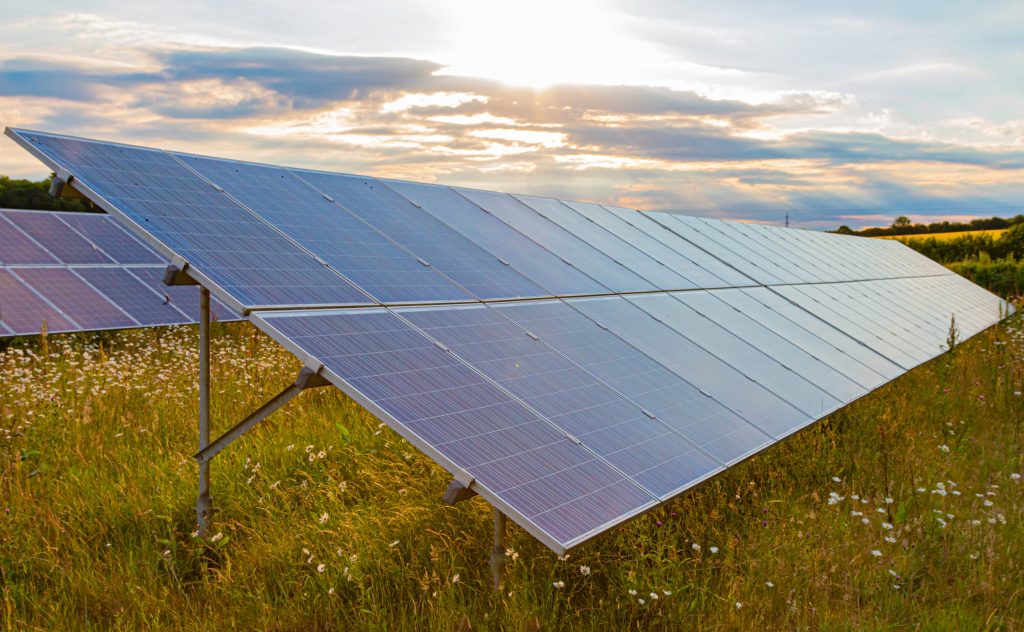
Solar Farm in Rural Suffolk

Sticking with the theme of solar farms, we know that community opposition to these developments have proved electorally decisive at a local level recently. Just this year in the rural conservative county of Rutland, a by-election for the ward of Ryhall and Casterton saw the Conservatives who were the favourites get upset by a candidate who stood in opposition to the Mallard Pass solar farm situated within the ward which is exactly the sort of development that the two Conservative leadership candidates are criticising as its converting farmland. Perhaps most shockingly about that council by-election is the fact that this candidate stood for the Green party and yet simultaneously stood in opposition to a renewable energy development. There is much you can draw from that, but perhaps the most important is that the goals of political parties become blurred when community activism undermines the broader intentions of the political party.

To analyse the NIMBY mindset, the words of the newly elected green party councillor for Ryhall and Casterton are useful because they lay out the important aspects of the opposition towards this solar farm development. His words were “We do need renewable energy which has been brought into sharper focus by recent world events, but there are other green initiatives we can pursue and there are more suitable locations”. We can break this down into three parts. First, the councillor makes the admission that “we do need renewable energy”, which is important because it’s important to understand NIMBYism is usually not framed in a way that opposes the goals of the development and candidates often recognize the needs of the nation or region in their argument. The rejection of it is usually based on two grounds which he elaborates on further. His second point is that “there are other green initiatives” which we can call a criticism of the form of development. So, in this case it could be that he is arguing that solar energy is not ideal and that we might want to focus on wind energy or nuclear energy, or that solar energy is useful, just not in these particular circumstances. His other justification for opposition is that “there are more suitable locations”, arguing essentially yes we need to develop, but this is not the best place for such a development to happen. Bringing that all together, his argument and mindset isn’t a rejection of the problem trying to be addressed, but rather a criticism of the locality of the development and the form of development being made.

We can understand the fundamental problem within the NIMBY mindset in these three parts of the mindset. The problem is typically accepted to be pressing and needing a solution, but the solution presented is rejected by politicians because of the proximity to you or your constituents. That is selfish in nature because your criticism is based on the way in which you’re affected by a solution to a common problem that the nation faces. Any community could reject any development based on the same justifications. That doesn’t mean that there are instances where developments shouldn’t be opposed, but that the opposition needs to be far more substantive and that going through a cycle of constant community activism against any form of development across Great Britain is going to be really damaging long term for the huge series of challenges that the country is facing. We cannot solve problems without being able to implement solutions. 

Today we face two key crises that are really bringing to attention why NIMBYism as a trend in our politics is seriously damaging to our next generation. These are the climate crisis and the housing crisis. We’ve already touched on how opposing solar developments has been effective in local politics and become mainstream in national politics, but it’s important to explain why this is dangerous. With this summer showing Europe and China just how much our climate is changing with record breaking heat waves, it has become more clear than ever that we need a greener society and we cannot do that without building the infrastructure which moves us away from unclean energy production. If that infrastructure is frustrated at every level of government, then these developments won’t happen and that would be detrimental for our climate. Another side effect will be that we as a country are less self-sufficient in our energy production which considering the geopolitics of Russian gas and the huge rises in energy bills related to that, is vital to encourage. Similarly, the housing crisis is being exacerbated and made worse by the lack of political will, particularly in local government, to approve housing developments.

The Housing Crisis is recognized nationally by all parties. At the last election, the Conservatives committed to 200,000 homes a year, the Labour Party 150,000 and the Liberal Democrats 300,000. Yet, within local politics home building becomes political kryptonite because it is easy to attract voters by opposing home building. One way in which new housing is often made difficult to build is the green belt. We’ve seen this issue brought up in the Conservative leadership contest with Rishi Sunak vowing to only build on the ‘brownfield, brownfield, brownfield’, with Liz Truss also opposing building on the Green Belt. The Green Belt is arguably one of the most misunderstood government policies. The Green Belt is essentially a policy which is about preventing urban sprawl, rather than protecting particularly important green areas. For instance, the Lake District, the Yorkshire Dales and the North York Moors are all areas which are brownfield. When you map out the green belt its like getting a ring donut and placing it around a city to stop expansion. The effect of this is that it prevents housebuilding where housebuilding ought to be. Rather than building on the edges of urban areas, developers are forced to develop in the rural countryside, ironically having an impact of tarmacking over the countryside. Having green areas on the edges of cities is important, but the model of building rings around cities is perhaps outdated. Looking abroad to city planning designs, one model which offers developers the ability to continue to build would be the fingers model of development around Copenhagen. This ensured the creation of green areas but allowed Copenhagen to develop along five ‘fingers’ that stretched out of the city. These sorts of approaches enable development to happen along predetermined paths which allow infrastructure to be planned best around future developments. 

Altogether, with growing demands for affordable housing, the need to transition to a cleaner environment and the fact that the next generation will be less well off than the generation before it, the need for development across Britain seems clear. Yet, at the very time when we need to be building, now more than ever, it feels as though our politics is working against that interest. One of the driving forces around NIMBYism is that it is electorally viable and that is the case because people across this country are valuing their own proximity to developments over the developments themselves. One myth is that when your area gets a new housing development you lose out on your house value, but a recent study by LSE found that with the exception of the period of time during construction, values of houses in these areas continued with regional average trends. We as young people need to take on the mantle of making it more politically popular to build and to encourage developers. There is more to be done politically, but just in marketing to people the merits of development and disproving myths, we can get communities behind new developments and that will be one of the most important steps in ensuring we build the infrastructure for the next generation.

The Prime Ministerial tradition of bloating House of Lords

The House of Lords serves as an advisory chamber within our legislature. The chamber is at its best when it’s full of experts that represent the full raft of talent across the United Kingdom. From this, they offer a critical role in amending legislation and holding the Government to account. But, with Prime Minister Johnson coming to the end of three years as head of Government, he gets his resignation honours list. It is widely suspected that he will pack the House of Lords with even more conservative peers, and Johnson allies. Therefore, the question arises, is this appropriate? Should we consider some immediate reforms? And, when should we start discussing an elected upper house?

The Tradition of Packing the Lords

It is not just Johnson which has contributed to filling the House of Lords up. David Cameron, from 2010-15, appointed 112 peers. Theresa May only appointed 43 during her three year period as Prime Minister. The argument is that the chamber is old, which leads to deaths and retirements, thus a given Prime Minister needs to bring new life into the chamber. This argument is fair to an extent, but the House of Lords is much larger than necessary to be an effective chamber. 

This has been recognised by the Lord Speaker, who wrote to both Liz Truss and Rishi Sunak asking them not to appoint as many members to the House of Lords. As helpful as it is for a Prime Minister to constrain themselves, like Gordon Brown and Theresa May did, I believe this poses the question of structural reform. Using the House of Lords as a form of patronage is not necessarily helpful for the chamber, because this misses its modern day purpose to critique and review legislation. If we keep the House of Lords as an appointed body, surely we need a process to significantly limit the number of appointments made and make it robust enough that it is not a tool of patronage. 

The Agenda of Reform

This is not the first time that reform of the House of Lords has been suggested. There is a long history, which intensified in 1911 with the Parliament Act. This law legislated to weaken the House of Lords veto and cement the House of Commons’ supremacy over the Lords. Then, in 1999, Prime Minister Blair limited the number of hereditary peers to 92. Most recently, Nick Clegg, as Deputy Prime Minister, tried to create a new set of elected peers but this failed to get past the second reading. Therefore, there’s clearly precedent to reconsider the purpose and makeup of the House of Lords. Given the House of Lords has swelled in size over the last decade, and polling has suggested reforms to the chamber are supported by the public, we should seriously consider steps to deal with the upper chamber. 

We need to reassess the size of the House of Lords immediately, then we can discuss more fundamental changers, such as an elected chamber. Boris Johnson has created 86 peers, which is likely to increase by the time he formally resigns. This means the House of Lords has bloated to around 760 sitting members. It is clearly inappropriate for an undemocratic chamber, with significantly less power than the lower chamber, to be the larger chamber within the legislature. Therefore, for as long as the chamber is appointed, we need to regulate the number of appointments the Prime Minister can create to bring down the size of the chamber. This is already supported by a 2017 report by the Lord Speaker suggesting a cap to the chamber at around 600 members. This would bring it roughly in line with the size of the House of Commons which feels more appropriate.

Closing thoughts  

Ultimately, we cannot stop at merely reducing the size of the House of Lords. We should have a more fundamental conversation about creating an elected chamber, with a precise constitutionally mandated role and remit. This could be a Senate, which represents the regions and nations, that revises legislation. It would also give a greater role to the regions and nations of our Union within the legislature, which could help deal with our democratic deficit. But, history suggests that Lords Reform is a piecemeal process which ends up with compromised solutions. Therefore, we must immediately embrace capping the size of the House of Lords, limiting the number of appointments the Prime Minister can make and making the oversight of appointments robust enough to tackle cronyism. This would make the House of Lords more effective in its current state, until we can deliver on the promise of an elected upper chamber.

History rhymes: lessons to learn for the Union

It is Mark Twain who said ‘history never repeats itself, but it does often rhyme.’ This has never been more important than when we discuss the fate of the United Kingdom. A little over a century ago, the fierce battle was going on in the Houses of Parliament over Irish Home Rule. This was the existential crisis which led to Ireland becoming an independent country. Now, it is Scotland having this fundamental conversation over its place in the Union. I believe quite fundamentally that history is rhyming again, and it is time that Westminster learnt its lesson.

Kill Home Rule with Kindness 

Throughout the late Victorian and Edwardian period, the Irish Parliamentary Party called for an Irish Parliament in Dublin, akin to modern day devolution in the UK. The answer to these calls, by Conservatives and Liberal Unionists, was to kill home rule with kindness. This in practice was a set of policies which gave peasants lands, and other economic changes. These legislative changes might have made it easier for peasants to buy their land, it missed the fundamental point. During this period, there was a growing and distinct sense of Irishness in Ireland which wanted a formal political institution. This agenda could never placate the cultural and political desire for autonomy.

I believe we face the same problem in the Union today. In the lead up to the Edinburgh agreement in 2012, there was a growing debate over Devo-Max. This involved devolving full tax raising ability to the Scottish Parliament. It was the decision of Prime Minister David Cameron to not allow this on the ballot in the 2014 referendum. Polling suggests that upwards of half Scottish and Welsh people want some form of devo-max. Combined with this, northern towns in England voted to ‘take back control’ in 2016. This partly involved the desire for a new political settlement within England. This is supported by 2015 polling from ComRes suggesting that 82% of northern adults want some form of devolution. This all supports the argument that there is a growing desire for constitutional change, outside of Westminster. Successive governments have attempted to placate this, with an ill-defined ‘levelling up’ or ‘northern powerhouse’ agenda. Just as with the Irish Land Acts, levelling up money is required to tackle regional inequality. But, it will not deal with the fundamental desire for politics to work differently. Despite this desire being stronger in Scotland, that does not mean we should ignore the growing grumblings of an unfair political settlement within England. The lesson to learn from killing home rule with kindness does not work, and the best answer is to embrace a new political settlement.

Too little, too late

The Liberal Government in 1912 presented the third Government of Ireland Bill. Westminster then spent two years discussing how Home Rule should be implemented, how much power should be devolved and how to deal with Ulster Unionism. This was clearly not easy to solve, but then the Great War happened. This sealed the fate for the Union in Ireland. The 1916 Easter Rising created martyrs, and by 1918, Sinn Féin won a landslide in Ireland. 1919 saw Ireland declare its independence. By circling back to 1912, it seems like a distracted Westminster offered Ireland too little, too late. The demands for autonomy within the Union were not met, so they hardened for independence. 

Again, the United Kingdom faces a similar crisis today. Our main unionist parties, the Conservatives and Labour, are clear that they will not grant a Scottish Independence referendum for another generation. Some unionists will even go as far as making a positive argument for the Union. But, this misses the point. In 2014, a vow was created between these parties and the Scottish people. They agreed if Scotland voted to remain in the Union, far greater devolution would be granted. For many this meant fiscal devolution, but for the Conservatives, it ultimately meant more half-baked devolution. This broken promise creates resentment, rejecting a referendum with no criteria for a future referendum created even more resentment. This is the same problem which we faced in Ireland over a century ago, where the unionists parties debated and negotiated between themselves, while the Irish people moved onto the fundamental question of Independence. The lesson is clear: we should be offering the nations and regions of the UK a better deal, if we are to save our Union. This means a radical, new political settlement. If we fail to do this, just as happened in 1919, the Union will crumble a little more. 

Conclusion 

The United Kingdom is facing a familiar crossroads. Last time, Westminster chose to do too little and to squabble between themselves, instead of finding the solution. This led to bloodshed, and Ireland ultimately becoming an independent country. We are facing a similar crossroads. A second Scottish independence referendum will happen, that is inevitable. Scottish Independence is not necessarily a given, but neither is the Union staying intact. If Westminster and more widely unionists, want to save the Union, they must learn the lessons from last time. They must recognise that economic changes and investment is helpful, but does not fundamentally deal with desires for autonomy. Complacency will lead to resentment, and ultimately tear apart the Union.

Obviously, Westminster has already made significant mistakes towards our Union. The feeling of betrayal is strong in Scotland, because the unionist parties created The Vow, yet never delivered substantial and radical devolution to the Scottish people. So, we will never truly know if we are too late to recognise our Union is under real threat. The lesson of a century ago is that we need to abandon complacency, own up to the betrayal and deliver on the political promise given to the four nations of our Union. In this, we can create an equal partnership between each part of the United Kingdom.

This also is not just a Scottish problem. This growing desire for political change exists across the UK. I fundamentally believe that the anthem of Brexit, “take back control”, was not just about Brussels, but also about regions across our Union taking back control from an over centralised Westminster. Yet, that thirst has not been quenched. Resentment will grow, if we fail to offer radical political solutions to these desires.

There’s no need for the next Prime Minister to call an early election

Listening to interviews with candidates running to be the next Conservative Prime Minister, most journalists felt compelled to ask a question they already knew the answer to: Whether they would call a general election once they win. Unsurprisingly all candidates said that now would not be the time to call a general election, which often led to a follow up question about whether or not they ought to considering they were not elected to be Prime Minister. Boris Johnson is often credited as being a pivotal part of the Conservative victory in 2019, and with that an idea that he has a personal mandate which transcends the Conservative Party is relatively prevalent in our print press and on social media. Lots of politicos online and in the press have brought into question whether ousting Boris Johnson midterm was an undemocratic act by his parliamentary question.

Ultimately, the question of whether it’s democratic or not boils down to that instinctive thought within democracies of legitimacy in our government. For John Locke who wrote in the 17th century, legitimacy of rule relied on the active consent of the ruled. The importance of legitimate government has become almost subconscious within the way we view our government and other issues. For instance with Brexit the idea that parliament was attempting to sabotage the process undermined the perceived legitimacy of our parliament. In terms of governments, when the leader who led that party into an electoral victory is defeated, their mandate to rule does become challenged. Least not because of how personalized the Conservative Party has become around Boris Johnson as its leader, the notion of a Prime Minister who never won an election doesn’t sit well with people who fought for his electoral win, nor does it seem to sit easy with those who claim to defend our democratic values. The cynical, and frankly most supported view, is that prime ministers call elections not for democratic purposes but for electoral purposes. It’s because of this that it’s important to understand both the electoral aspect and democratic aspect within the debate around calling elections. The two questions to address are if it is electorally smart to call an election, and if it is democratically essential to call an election. 

The Electoral Aspect

Historically, there is a very strong precedent for Prime Ministers to enter office midterm. Both Theresa May and Boris Johnson for instance entered office midway through a parliamentary term, however they both chose to call an election. This isn’t the norm in British politics however, Brown, Major and Callaghan – the three PMs before May to enter office midterm – did not go to the polls despite facing calls to do so. For May and Johnson, the need to call an election was pressing in part due to parliamentary arithmetic which made life difficult to pass legislation (for both Brexit being a huge factor in this). Ultimately this lends itself to the view of an early election needing to be called for electoral reasons. The idea of a ‘honeymoon period’ is often discussed by politicos which essentially argues that new leaders for whatever reason appear to get a boost in the polls for a short time. This idea however is not entirely borne out. May famously lost her majority in 2017 when she had huge poll leads at the start of the campaign and in contrast Johnson was able to attain a large 80 seat majority. Going back further, Brown initially polled well in 2007, but missing the early election call, the financial crash and successive political scandals sunk his premiership. Furthermore, Major, although he waited late to call an election, still faced his first election within 2 years and made a shock victory despite being behind in the polls.

This is all to say, there is no orthodoxy in whether a Prime Minister does or ought to feel inclined to call an election. The truth is that any ‘honeymoon period’ usually has more to do with the lack of support in the opposition, such as with Corbyn for Johnson, the lack of support in the previous leader, as was the case with Thatcher, or the political context of that period. Electoral incentives will be more important than any notion of legitimacy to those in power on whether they will decide to call an election. While it is tempting for anyone to jump to conclusions based on previous form of Prime Ministers electorally that it is right or wrong to call an election, frankly it takes a study of that particular moment in time to make that decision – there is no conventional wisdom. That said, from a nonpartisan standpoint, what ought to be the case for democratic reasons should guide whether or not a new Prime Minister takes office. 

The Democratic Aspect

The model of democracy used in Britain is a representative system which follows what is known as Burkean model. Burke was an 18th century MP who argued that MPs are representatives entrusted by the electorate to use their own mind to make decisions on issues, as opposed to simply being elected to follow the opinion of the leader. In essence what that means is MPs have been individually chosen by their constituents to make decisions and serve their constituents how they feel best. This principle might appear natural or obvious, however it is essential to the way in which our parliamentary democracy works, and actually very relevant to the debate on whether or not MPs should have the right to change the party leader midterm because ultimately voters do not vote for a Prime Minister at the ballot box, they vote for an MP. 

This mechanical way of looking at our democracy does draw some criticisms around being withdrawn from the reality of how voters’ approach parliamentary politics. It is true that you cannot divorce the fact that MPs are members of political parties, and people vote primarily for political parties informed by the messaging and charisma of the leader who all MPs pledge to make Prime Minister. Essentially this criticism is that MPs owe their jobs to the personal mandate of the Prime Minister. Yet this criticism can be brought down on several grounds. First of all sticking to that Burkean model of democracy, our system is designed to ensure that MPs have agency and are not simply enslaved to the will of any individual Prime Minister. If we adopt the stance that a Prime Minister ought to be put to the electorate when they’re replaced, we’re undermining the agency of these MPs to make that decision. We entrust MPs to uphold the integrity of public office, to fight for their constituents and that is not possible if removing Prime Ministers which no longer have the confidence of these trusted MPs would cause electoral harm to MPs. Secondly, the criticism assumes all MPs won their seats because of Johnson, whilst we know that in many so-called Blue Wall seats lots of Conservative MPs won their seats in spite of him. Unsurprisingly Conservative MPs in these often Lib Dem facing seats were some of the most vocal in calling for Boris Johnson to go. Thirdly, all MPs within a party run on the same manifesto. This means they’ve all made the same pledges to the electorate and not just beholden to the party leader. 

Fundamentally, much of these questions stem from the fact we do not have full separation of powers in the United Kingdom. Both our legislature and our executive come from the House of Commons, and this creates a situation whereby there is a clash in the perception of where MPs get their mandate. We need to answer this question by what ought to be the case, which if we’re democratic maximisers is the legislature. In the United Kingdom we mostly have a two-party system which means our two parties are big broadchurches. This is problematic, because frankly, people don’t fit neatly into these binaries. Empowering the diversity of voices within those broadchurches allows more accurate representations of the party’s supported to be expressed which means that representation is improved in what would otherwise be a binary system.

Finally, quite simply circumstances change and thus so do the focus points for a Prime Minister and the interests of parliamentarians and the country. Focusing on the fact that any new Prime Minister wouldn’t have a mandate ignores the fact Prime Ministers always make decisions that go against their manifesto commitments because political life is rocky and unpredictable. Today a pandemic and a cost-of-living crisis have meant that what was pledged in 2019 has had to change in order to adapt to the new social and economic conditions. Prime Ministers must adapt to their circumstances, and thus so do parliamentarians. 

Closing Remarks

A new leader of the Conservative Prime Minister is going to be elected and they will become the future Prime Minister. Both Liz Truss and Rishi Sunak have ruled out an election. Both will be plagued by the fact they’ve got to call an election by January 2025 and the argument that they do not have a mandate. This might prompt them to consider calling an early election, but to do so is not something that is necessarily smart. With the Labour Party ahead in the polls, any restoration of the Conservative lead in polling during a ‘honeymoon period’ may easily fall flat in a campaign as it did with Theresa May, or even within months as the leader settles into office as it did with Brown. It is true that many will potentially criticise Liz Truss or Rishi Sunak for being unelected up to the point of an election but levelling a criticism of being unelected is an unfair criticism. They have become Prime Ministers because our system has worked, with changing circumstances, MPs have had to step up to protect the integrity of our democracy and integrity of our government amidst challenging times in which the incumbent has demeaned the office of Prime Minister. They may not have a personal mandate, but the point of our democracy is we elect the people we think are best suited to react to events. The cost of living crisis, the pandemic, the war in Ukraine; these are all things that there was never any mandate for, but no one could question that the government were legitimate in responding to them.